
Sunday, June 13, 2010


Wednesday, June 09, 2010
Why I'm presently barred from the future

It has long been assumed that time travel is not possible because humankind would foul things up. As if they weren't already fouled up.
In fact, it seems obvious that this is exactly what has been happening, these people from the future keep coming back and trying to fix things. What they don't realize is that computer viruses and many other things are also from the future.
Hear me out.
Ever since quantum theory was formulated, it has been dastardly in its accuracy of prediction. Even though these predictions are in the form of probabilities, it remains that they are incredibly accurate.
And ... I'm falling off a cliff here. Something is interfering with my mind. More ina later post.
Monday, May 31, 2010
Move over Garrison Keillor

Poor Garrison!
Let's face it, big guy, there are only 24 hours in a day. I've never read any of Garrison Keillor's books, although I've listened to Prairie Home Companion once or twice and saw the movie, which I bought for my father-in-law. The midwest holds no romance for me, I'm one of those southern idiots whose accent you make fun of while I make fun of your attempts to imitate it.
There are tons of great writers out there, and their books are still available, many for free.
Do we really need a publisher/gatekeeper? Well, you sort of have one. It's not even human, it's called a search engine now. And trust me, we have a long way to go when it comes to decent searching.
For example, if you type Garrison Keillor books "most nostalgic" into Google, your first hit is a heap of drivel (much like this blog) called physics 198-101. It's not about physics, even.
So, publishers, get a life and go into critiques. Volunteer to help us find the good stuff that we are doing. You can't get rich on it? Well, no one is going to be rich in the hive, except for the beekeepers, and they are all getting jobs with the government.
Will this push back creative individuals? Sure! But hey, you wanted Democracy, and everyone is equal in the hive, just not very fat or well rested.
Still, we can envision somewhere the hive coming up with its own American Idol brand of writer judging, and eventually we'll see niche judging until, finally, the hive is ordered and structured in a way that we can all search.
Meanwhile, guess what, we're living in web anarchy. For the adept, that's not so bad, as long as you're unemployed and have plenty time on your hands. Have you idly ever wondered who invented those infernal coat hangers? Look them up. Facts we can find. It's judgment that is lacking on web searches, evaluations, and because these are personal, the solution is for all of us to get in line and think the same. You don't think it'll happen? When's the last time you searched for an article and didn't find the best one on Wikipedia?
We've had critical mass marketing of groceries, tires, computers, eyeglasses, and we're rapidly entering critical mass marketing of ideas, where just finding yourself in the Book of Sand is an infinite task.
Wednesday, May 26, 2010
Insanity and Energy Perception

I've been re-reading that scorn of new age tripe, The Celestine Prophecy, and tried to stop before it got really crazy. At the time it came out, the author James Redfield really hit a nerve.
But at least toward the beginning, he said two things that made me think. The first was about our perception of beauty. Now, I'm not going to sit here and say that beauty is universal, so understand, all this is totally personal but nevertheless true for me, my opinion.
And what I'll say about it is , yes, seeing something beautiful is energizing, whether it strikes me as a beautiful scene, painting, woman, or piece of mathematics.
So rather than dwell on what the nature of beauty is (aesthetics) I want to think about why beauty has this energizing effect on me (and apparently on Redfield.)
Working from specific examples, a beautiful scene, for example, can evoke memory or associations with pleasurable memories, as well as pleasurable expectations. A beautiful woman can evoke expectations of physical pleasure. A painting, for me, can evoke pleasure in appreciating the competence of the artist, the use of color and form, or wit. In fact, laughter is a particularly energizing activity on its own. What is happening here, and does it really have to do with some sort of floating energy field, or what? Just why do we say it energizes, anyway?
Without researching it, I would surmise that aesthetic pleasure releases chemicals into our brains that stimulate us much as a hot fire would stimulate a kettle of water to boil. We feel this in a physiological sense, and relate it to what we've learned about energy in physics.
What bothers me, and what I would like to understand further, is why there is such a popular crazy sect out there that insists that seeing energy is similar to seeing an electric or magnetic field. This seems to me to be unrelated to seeing beauty. I can perceive beauty, basically conceptualize it and then I can understand as above the energizing effect it might have.
That is totally different to what the new agers call seeing energy, seeing we are all connected. Unless.
Unless they are talking about a conceptual leap, similar to the conceptual (you might say automatic or subconscious) leap that we make when we affirm something or someone is beautiful. To my mind, this feels like direct perception, but there is a mental process that takes place in between. That's what I call conceptualization.
Like any human act, conceptualization can be practiced and developed until it's practically automatic. If the new agers are talking about this and call it perceiving energy, then I wish they would discuss it that way, rather than as a directly visual perception.
Castaneda, a true master of prose and sorcerer of words, alluded to the indirectness of this in some of his books. His shaman, Don Juan called this 'seeing' a certain way of holding the eyes.
On the other hand, Carlos goes off and starts seeing fibers of light everywhere. This is certainly dramatic, but is totally different (and more incredible) than simply perceiving/conceptualizing/being energized.
I'd like to get some straight talk on it, but so far haven't found any resources, except for self-promoters selling mystical books and CDs.
s
Monday, May 17, 2010
Quantum Behavior in the real world
 It happens in photosynthesis.
And, it appears Roger Penrose predicted it before I did, of the human brain. That's why he gets the big bucks.
That being said, I stand by my conviction, made in ignorance of his comments, that our minds are capable of quantum entanglement and that the brain has the capability of viewing through time similar to the way a wormhole would go through time.
However, the new work leads me to a more precise general description of what is going on.
All the successful work with quantum entanglement including the study of photosynthesis points to the wave nature of the photon and other particles as where the real magic happens.
This shouldn't be any surprise, if we realize that almost all of our advances in science have been dependent on wave mechanics.
More importantly, as humans, we are intimately connected with the physical world through wave information. There's no question that this has a direct bearing on our own interactions and also our social interactions. It's not hard to posit that complex wave activity is at the heart of most, if not all, of our macroscopic world. That we have been ignorant of this up until now is largely because our attention and most of our success in technology has been through the exploitation of the particle nature of mechanics and through digital information processing.
Personally, I can point to quite a few examples of wave mechanics and its significance to human perception: Holography creates three dimensional perception through wave mechanics. Another: A few years ago, the DX7 was a new form of music synthesizer that worked through wave modulation algorithms. It created fairly realistic sounds that were very difficult for non-engineers come up with. (Later, digital sampling came into prominence, and wave modulation synthesis took a back seat.)
It seems also that, tied to the whole process of entanglement, what we call chaos but what I would call fractal complexity is at work. Given that most of nature is fractal in composition, it seems to me that here is the real bridge between the quantum and the macroscopic world.
What is surprising is that we can get a handle on this level of complexity at all, but that's probably because of our success with scaling up complexity through computer reiteration.
Up until now, humans have been wave pattern perceivers. Now we are at the beginning of being wave pattern scientists. The pathway will be through set theory and number theory. In my opinion.
Monday, May 03, 2010
the third of may

The essence of automatic writing is not to think about it too much, to get lost in making the interesting curves of cursive writing.
Here, we see a rehearsal of interpretive dance, as members of the Peoria Ballet reenact Goya's painting, The Third of May.
Saturday, April 24, 2010
The new reading underground
 This generation doesn't read books. you hear it all the time. and its a load. Or at least a misload . Because this generation reads. A load. Just not of books.
I think all of that will be changing soon. What we're not at all prepared for is what a book will be in the very near future. Oh, I imagine microsoft and apple think they're prepared for it. But I'm talking about the authors and the publishers. And to a large extent, the rest of us.
Because the so-called book, biblio, reading object is going to grow anew out of this neural network we call the internet. It will be completely different, and will probably mirror our perception of reality closer than a string of paragraphs and chapters.
However, we have to be careful here. Mankind has certainly had the opportunity to add illustrations to books since the beginning of writing, and many times did. But there is something about the 'story' that pushed media other than the words into the margins.
Most likely it is because reading/word processing is an abstract activity that until now we have been accustomed to doing in isolation. But 50 years of computing have begun to change that. With a two and a half generations raised on visual media, we have adults living now who are ready to rewrite the book, so to speak, on books.
My guess is that we will see hybrids similar to illustrated books, and comics and things in between. But somewhere along the line, the mass market will ferret out humankind's new preference for narrative content. The experimentation taking place now has been going on for some time. I think we're beginning to tire of reality clips and mindless humor-attempting confabulations across different sources.
What I haven't seen yet, except in a recent re-enactment of "Ferris Bueller's Day Off" on Twitter, is real time drama (think live broadcast internet plays), perhaps because no one has thought of it before (I doubt that.)
We shall see.
Thursday, April 15, 2010
Three Upcoming Memes
 First of all, wiki(s). We'll see a slight upsurge in wikis as people figure out that wiki(s) can do something regular file management can't do: tag.
But then they'll flounder, as people realize that wiki(s) aren't any better than classic tree directories.
Replacing these will be shiftable hierarchies, with the most important five or so items/folders/projects taking the main space and shifting as the need arises, eventually going back down into the pile. Software that exploits this will be developed. Apples i-line of products will accelerate this.
Another meme I think you're going to see surface and hang around for a long time I like to call "Questions we forgot to ask." Here's one for the dating-relationship set: What do birth control pills do to libido?
Here's another one for the family health arena: Have studies on vaccinations and the recent increase in autism explored the possibility that fatal childhood diseases are filters for people genetically predisposed to autism? It's a logical question that begs to be asked, even as we see other illnesses on the rise such as allergies, attention deficit syndrome, and any other malady you want to blame vaccinations on, but in reverse.
And to round this set of memes up to three, there is this one: the singularity has already happened. Move over, Ray.
Sunday, April 04, 2010
Me Too, Me Neither -I PAD notes

As you know, I tend to be non-conformist. It's not intentional, just more interesting. But, golly, I'm fascinated by the phenomenon of the Ipad. I don't own one, but do have a slate, and I love it.
So when I see a slate that potentially could be as big as the ipod and iphone (don't own either-non-conformist),the insights it spawns in others just amazes me.
One easy way to look at it is this: Apple has simply created another device, like the Wii. Something new and different. Not a replacement for anything, another product.
Like all new products, it has the potential to push out other products. Has Apple pushed out Pc's? Or Blackberries? Hardly.
Now we get to the really interesting part. Apple has, in the past, pushed ON other products. In other words, because of Apple, other gadget makers, including those of Pc's, are going to be making their products better: easier to use, more innovative, cheaper.
How, is wait and see. And that's what's confusing the gadget pundits. You can't predict the market, because the driver, the economic raison d'être is the user, hundreds of millions of them. We're in for a ride on this one .
Friday, March 19, 2010
Scaling is Everything

In as many days, there will be times and times again. This is something I've seen in my visions.
As usual, the world doesn't seem to worried, but I think we all need to be on alert. Just in case.
Next door to this posting is one on the Plank Scale in Wikipedia.
It's becoming obvious to me that scaling is much more fundamental to human perception than we credit to it. For example, the artwork on the left, so similar to "nude descending a staircase" is titled "sad young man on a train".
This forces us to change our perception of the scale of the picture. This is something we do everyday in perceiving things, and a source of many optical illusions and visual errors.
As long as humans perceive, scale will be important, not just visually but also conceptually. A common metaphor is 'stepping back for a larger view' , 'looking at the big picture', but we are talking about a mental ability to take a whole as a concept.
Most of human conflict and disagreement can be tracked to differences in metaphors, and scaling is one of the basic metaphorical tools that we use.
Something similar can be observed here (I apologize for the ad at the beginning of this video.) In this long film of scale change, we can see that our mental concept of a clay bowl breaks down into abstraction at extreme scales. We watch the video hoping to see something 'interesting' or 'understandable', but even visually, the zoomed-in bowl bears only a random resemblance to anything we would normally call 'clay'.
In other words, it's impossible to make a prediction of the final image based upon the initial overview of the bowl. Is it any wonder, then, that our prediction of the structure of electrons and protons and neutrons is also impossible to predict? We could start at a different point on the clay bowl and come upon a different set of zoomed frames. The same might be said in the zooming out process.
Visual characteristics at one scale make no predictions as to visual characteristics at another scale. And this is exactly what happens in physics during the transition from human scale to the quantum scale.
Tuesday, March 02, 2010
The Antidote
 What happens when everything changes?
Don't be pretentious about it, it's happened before. The assemblage point moves and then all the facets in all the mirror-jewels of perception are rearranged.
This happened frequently in younger days, but now when it happens, the shift is quite noticeable.
Long ago it became obvious to me that Castaneda was actually saying something, but using his own brand of magic sorcery to turn it into something creative.
The assemblage point. There's not really another word or term to describe this view from the cocoon that makes up our world. And if you don't buy the concept of the cocoon in the first place, then you really won't get it.
Much more relaxing to say 'no, I'm not biased, I don't really have a point of view, blah blah blah.'
You liar.
Maybe another useful way to look at the bubble of perception is to relate it to a directory tree without an index. Once you get inside any directory, its contents become your world, because this is all you can see. Perception is like that. Borges' labyrinths. A sudoku process.
Monday, February 08, 2010
Anything can be found in Anything

Humans are so good at finding things.
I think we could all be as happy as kings.
Monday, January 18, 2010
Some words of explanation

For example, six years ago, or maybe it was seven, a whole shipload of people died in a series of hospital accidents. It was in the news, some of them had been pulled off of respirators by mistake, others were given blood thinners when they should have had thrombin applied to their wounds, still others were just left in the back corners of emergency rooms. It was quite a sensation.j
But the problem is, none of it made any sense. Not only did all the accidents seem unrelated, but they happened all over the country on the same day, in some cases down to the same fifteen minutes. That was just too much, and like other things that don't make any sense, people forgot about it.
Only I didn't forget about it, because my mother was one of the ones that died. She'd gone in for a stomach ache, and after she almost bled to death, a lung collapsed, and then her emphysema did the rest. Our family went to a lawyer, but we just didn't have the heart to pursue a long expensive legal battle.
I was the only one in my family who knew what had really happened. I still have a picture of her that I took at the funeral home, clearly showing her right hand. It's been itching under my skin for seven years and I just finally had to talk about it. Only I can't talk to a shrink, and if I talk to the wrong people, it would be pretty bad. So I've decided to tell the whole world about it, and probably then I can forget about it. Every last bit of it.
And just who is Norton Mansfield?

Why do you insist that you're a paranoid, the doctor asked me. Just because you don't use quotation marks?
Quotes would mark me as 20th Century, doctor, I said. Isn't that proof enough? But you don't want proof, do you. No matter what I might say, you're going to have me uncommited.
It's just that you couldn't be a paranoid and also have the mindset that you do. I'm convinced that it's all a facade, a misdirection of sorts. What bothers me, is I can't figure out a reason for it.
Have you ever read Heinlein? I asked. He was good at putting a finger on it. Never live in a country that requires ID cards, he wrote. So I do the next best thing, I have so many passwords and personalities that they'll never find me. And even when they do, they'll just think I'm a fictional character, not realizing that the character has to have an author.
That may be, said the doctor, but I still insist that you're faking. Right down to the absence of quotation marks.
It was enough. My time was up anyway, so I shook his hand and found my way out, all the time thinking that he probably wasn't one of them.
I know what you're thinking, that this is another one of those novels about a nutcase who thinks there are all sorts of folks out to get him and then sooner or later it turns out he's right. Well, if I wanted to make a buck or two, that might work. The old formulas are pretty reliable. But what if I don't want to make a buck or two? What if I just want this out there and what if I told you that's the best place to hide, in the bowels of a fictional disaster, a novel without a plot and certainly no characters that you would ever want to identify with?
You see, that doctor, the one I just left, shaking his head, he's right where I need for all of you to be. To him, I'm just barely between existing and not existing. In fact, ten minutes from now, he'll probably forget all about me, because he can't pigeonhole me into either a crazy or a normal.
But there's no time for that now, I have to make a plane.
Update: Still Living below the radar

The Hive Mind hasn't found me yet. I hope they never do. They would kill me if they did.
I'm sending this to you as a story because they DON'T READ. The Hive has no need for stories, they thrive instead on the multiple realities of all their members.
An Isolated like myself wouldn't stand a chance, but so far I don't think they're looking for us.
Virginia, I know this sounds like Paranoia, I KNOW you don't need to hear it, but be very careful what you say and who you say it to, especially in Airports and taxis. I went and saw the new Sherlock Holmes movie and all I could think about it was poor George C. Scott and what he had to put up with to make "They Might Be Giants". THAT is what we're up against. But none of the Hive has ever seen that movie...
Now the Hive is opening up legal marijuana use and you know what THAT means. Those of us who don't need it will begin to stand out, because WE'VE known for years how to induce the mind into going other places than the Hive. I'm thinking maybe I can hide behind this ridiculous paranoic facade for another few months before I'll have to go up against the Cuckoo's Nest machine, you know, the one that Big Chief Bromden told Ken Kesey about and that he wrote about. Last month they gave me an Asian surprise when I found out my new password was identical to the name of their first leader. Was it autosuggestion? Certainly it couldn't have been coincidence.
When someone gets inside your head the first time, it can be terrifying. But now I just change all my background profiles and move on.
So, my dear, consider this the first installment in a novel that probably won't find a publisher until mabye twenty years from now. By the way, there's a storehouse of bad novels in my attic, the hidden one that is behind the little doorway in my old upstairs bedroom. Look behind the water heater. Be careful not to fall through the rafters. In particular, check out 'the Coming Self-Destruction of the United States of America.' It was published under a pseudonym, and the author was recently swept up into the Hive.
Take care, and keep me in plain sight. That's the best way for me to survive.
Norton
Tuesday, January 12, 2010
It's just a robot
 Two of these old Talon robots have been stolen from a military base in Afganistan. Look for them somewhere on Microsofts new auction site, MBay.
Tuesday, January 05, 2010
Tuesday, December 08, 2009
On the development of an alternate personality
 On the development of an alternate personality.
I leave this scrap to the winds, hoping that professionals will learn from my own experience.
I'm in the process of developing an alternate personality. It's not something that I have total control over, and in fact am trying to resist its attempts to surface.
However, its logic is compelling, attempting to justify itself in order that I might bodily and morally have some sort of escape clause built into consequences of any of my actions. The escape clause is 'mental illness'.
So, you can see it's contrived , yet it actually isn't because, as you see, I'm trying to resist it. I would compare this to the compulsion to shoot yourself in the foot to avoid military enlistment.
It's not something I really want to do, but here it comes again, saying how easy it would be to slip into dissociation in a serious way, thereby eliminating all responsibilities of life.
Now, I want to say that some days can be really bad, and some situations we find ourselves in can be trying, or bleak, or relentless. So this little voice, or not even a voice, but a word game being typed, shows up and starts typing suggestions to you. And you actually find yourself wanting to type it a reply.
Is this from loneliness? Oh, the phantom typist can come up with all sorts of reasons why it is present.
Anyway, professional head doctors, this is how it develops.
Do you know what a defense against it is? To assert that reality is NOT fluid, and other materialistic types of statements. But this is just a shadow defense, because to say that assertions can affect our minds is to say that in some fashion, reality IS fluid, and if it is, then there you are.
And all of this without drugs!
Thursday, December 03, 2009
The Lost World - A Careful Attention

Saturday, November 21, 2009
The world wants to do these things.

If you want to get published, just write a book on the following.
How to lose weight.
How to stop procrastinating
How to fall in love
How to write a book
How to be happy
How to get a tattoo
How to go on a road trip with no predetermined destination
How to drink more water
How to get married
How to travel the world
How to see the northern lights
How kiss in the rain
How to take more pictures
How learn spanish
How to save money
Thursday, October 01, 2009
Sudoku Perception
 There is an old saying, so old, that no one remembers it.
Which is my point: All of this information is here on the web right now. Most of it is unknown, unseen, the invisible web, but
that's just a metaphor for what is really invisible, which is the great mass of sensory information that we simply
miss. Lately I've been rather obsessed with this 'dark
information', because it is becoming more apparent to
me that it is key in understanding so much of what drives
and frustrates us.
This same paucity of true information exists in almost everything we're confronted with, simply because there is too much out there for analysis.
What this results in is literally a constructed reality. Witness the fossil record, a paltry handful of rocks that have been through a very selective process that can only hope to support the weight of theory that is in existence now.
In fact, you could characterize this phenomenon as a sociological process, similar to what Thomas Kuhn wrote about, in which a theory becomes more powerful than the data that support it.
Monday, August 17, 2009
True Power and Scientific Method Part 1.
 Having just read the Wikipedia post on 'power', I thought I might explain something that most people miss.
Power is not limited to our influence on others, or even to others and our environment. Rather, power also encompasses our internal thoughts and the other worlds we might imagine we inhabit. Let me explain.
If one accepts the premise that the input from one's personal human perception is 'assembled' or 'constructed' into a view of reality, then it soon becomes apparent that we have more power over reality than it might first seem.
But because this premise is not universally accepted, and even may seem to have been disproven by the scientific method, we should first start there.
We can begin with the fact that our sense perceptions change as we age. A 60 year old will often be unable to hear frequencies that a younger person might have no trouble with. You might say that the 60 year old is handicapped, but what is really happening is simply that the 60 year old has a different set of perceptions to work with. Because a younger person may not be able to perceive things the older one might catch, such as mannerisms, tone of voice, and so on.
To take this further, another 60 year old may not be fluent in the same language, which means their perception will be quite different than another person of the same age.
It is easy to pass this distinction off as rare and unusual. My thesis is that it is much more pervasive than the average person realizes. Indeed, it can be the source of complete miscommunication, strife, wars, and other conflict. I'm not alone in this view. You can find information specialists that have a much better handle on this concept than me. What I want to point out is simply that it exists.
Since we obviously construct our world based on our abilities, emotions, and past experience, it may follow that the whole construction is too complex to dwell on. Perhaps we should just take our construction at face value.
Of course, this is what the vast majority of us do. It could even be said that all of us do this at least part of the time. Indeed, the scientific method is aimed not at confirming our world view, but at discovering inconsistencies in it and from these inconsistencies, expanding human knowledge.
To this end, we are constantly conceptualizing. We are taking our perceptions, rearranging them, constructing various categories and fashioning something we call 'reality' based upon a personal system that most likely follows a pattern of doing what worked before.
Now, there have been various methods of altering this construction that have been 'discovered' throughout history. The most prevalent today is, again, the scientific method. And that is well and good. The scientific method might be categorized as a method for developing reliable and repeatable constructions that can be shared among more than one person. It is this sharing that gives the method its power.
Like any method, however, it carries limitations. More on these later.
Ok, that was strange...

What else is there to read?

Tuesday, August 04, 2009

Saturday, July 25, 2009
Luigi Pirandello

Thursday, April 02, 2009
Book Review: Pounce by Ken Stern

Tuesday, March 31, 2009
Mary Chapin Carpenter: Goodnight America

Wednesday, March 25, 2009
Illusion

Tuesday, February 10, 2009

Thursday, January 29, 2009
Rats in the Gutter

Friday, January 16, 2009
Reinventing Gravity
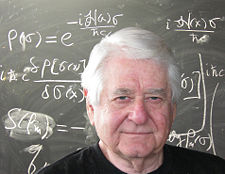
Physicist John Moffatt has a new book out called 'Reinventing Gravity. ' In it, he offers his take on the phenomena of dark matter and dark gravity. According to his theory, working with a variable quantity for the gravitational constant, both phenomena, which have not been observed, are no longer necessary.
Since I'm not a mathematician or physicist, what I found most interesting about the book was Moffat's approach to current assumptions in mainstream science, particularly regarding verifiability and paradigm shifts. His book fairly easy to read, and I haven't gotten to the chapters where he finally spells out his theory, but it appears that he is willing to let observed data have the last say. It will be interesting to see how it all falls out.
Perhaps my favorite part of the book so far is his exposition of the astronomical fascination with the planet Vulcan, a world that was theorized initially, with some authority and even logic, to explain the pertubrations in Mercury's orbit. Moffat likens Vulcan to current theoretization of dark matter.
It is interesting to see scientists grapple with some very fundamental problems in science theory these days. Moffat and Wilczek seem very willing to call things as they see them and not pull any punches.
My own feeling is that the current reliance on symmetry as a guide through today's research will turn out to be overused. It looks as if mathematics itself is in for an overhaul, because our current notation doesn't deal with the dimension of time very well. In simple equations, time is equivocated upon, and Moffat indirectly acknowledges this by refusing to take commutativity as an absolute property of some processes. Another absolute that hasn't been dealt with very well (in my opinion) is pi. This constant is an observed local phenomenon of our particular corner of the universe, and implies a flatness that could easily be violated elsewhere.
Finally, I think the concept of dimension needs to be taken even further than Mandelbrot has carried it, which physicists have implicitly done, but which hasn't made it into our explicit apprehension of the world. Scientists are still relying on Euclidean Geometry of three dimensions for interpretations and explanations of their math, when it is obvious that dimension is the wrong word for what they are calculating.
Dimension is too strongly associated with what we measure as length depth and width, which are entirely Euclidean and simply a construct that ignores other measurable continua in the Universe, such as heat, mass, and others which I might go into at a later date. If we replace the word 'dimension' with 'translation' or some other noun, then an order greater than three or four ('dimensions') becomes intuitively much less confusing.
Tuesday, December 23, 2008
No Subject

Wednesday, December 10, 2008


Tuesday, December 09, 2008
The Man Who Heard Voices
 Ok. I am fascinated by artists who wear their emotions on their sleeve, because, let's face it, I'm one of them.
This book is a play-by-play record of Night's creation of the movie "Lady in the Water". As such, it offers the best exposition of creative angst I've experienced since "Adaptation", a movie by Charlie Kaufman.
Every artist who struggles with creating should read this book. It's a reminder that no matter how hard you work, your message may just be too personal to attract a large audience.
After reading this book, I went out and watched "Lady" for the second time. Despite all the insights from the book, which certainly gave me an appreciation for the movie, it still didn't gel into an emotional whole. I tried really hard to "get it", and intellectually could do so, but my heart wasn't in the total picture.
As an artist, I realize that this may happen. It is one reasons why people disagree on aesthetic issues so often. Because art usually seeks a gut response, our guts often disagree. But one thing is sure: Night is a hard working craftsman who isn't afraid to make the kind of movie he wants to make.
My hat is off to those who try to live on the fickleness of the buying public. Night probably realizes that even the most sincere of us consumers don't always know what we like, and that it changes from day to day.
Despite that, he works his soul off to present his vision.
Monday, December 01, 2008
Grotne Nuke
Little boy crying at the bottom of the tree.
They won't come down and he
Is afraid of the tree.
He runs home to mama, who laughs to see such sport.
She dies, and the drug users come and take over Daddy's life.
Grotne home. Grotne Hume. Grotne bone and chicken loom.
Review: Kirby, King of Comics
 I remember in the late 60's buying a friends Marvelmania mags and a lot of comics to add to my collection. The guy who did Marvelmania was Mark Evanier.
He also wrote this new book, Kirby, King of Comics.
This was a pretty good read, I read it cover to cover the first day. I found out that Mark was an assistant of Kirby's for awhile. There was also a lot about his creations and the work environment for a comic artist in the last 50 years.
To me, the book seemed rather negative, and maybe this was intentional. As I understand it, Kirby and many other comic artists got paid zilch and were treated badly by their publishers in terms of rights and contracts. What saved the day for Kirby, according to Mark Evanier, was his ability to do comics really fast, often several at a time, and his persistence in order to feed his family.
Stan Lee is also discussed, and the relationship between the two makes me recall the Lennon-McCartney creative process. Evidently the story depends on who you talk to. In this book, Stan comes off as somewhat of a bad guy, and I've never read anything else about the two, so judge for yourself.
Personally, I remember the comics and all the amazing art and brashness of the dialogue and storytelling, and I suppose I should look for some other book that celebrates that. Regardless of who did it, I enjoyed living in the Marvel Universe. Kirby's artwork inspired my own and that of countless others.
All that said, this book has some fine artwork in it, and you can tell that Evanier wrote it as a labor of love.
Monday, November 10, 2008
The Grid: Frank Wilczek and Physics

Monday, November 03, 2008
This Unhistoric Day

On this day, before one of those days that will be written about, perhaps in history books, I thought it would be appropriate to write about something totally unrelated, as usual.
Did you know that 5 is 0% of 1024? That's how much of my storage space I'm using in this blog.
This is the lie that statistics brings you on your computer desktop.
It is a lie of scale. We live in an age when fractal scaling is all important to our survival, but it is ignored. The miracle of humans is that they can comprehend massive scale discrepancies, as between a universe and a pea.
But in a practical sense, we ignore it. For example, just how many organisms are living on your skin right now? We ignore this gracefully.
This is why, when the computer tells us that 5 is 0% of 1024, our brains flash WRONG. And then we go on with life. But, what are the implications?
If 5 is 0% of 1024, then what is 6?
Something tells me that this is the way the bacteria living on our skins, really want it. Scale, scale is the reality that is invisible to us. How many ppm of mercury is in the fish that you ate last week? Is it 0%?
This, on the day before we will be counting numbers and demanding perfect accuracy. It may mean the end of the world.
Sunday, October 19, 2008
Critique of Pure Movie: Fireproof Religulous


Hollywood has finally gotten it. Rather than raise any stink about religion, their tactic is to avoid comment on religious message movies altogether.
Well, maybe not.
Religulous - Box office to date, 9 million, reviews 97.
Fireproof - Box office to date, 20 million, reviews - 17.
While religious message movies such as Fireproof and the anti-movie mockumentary Religulous are usually predictable, what is more interesting is the reaction of the movie critics. The ones that bothered to review Fireproof put it down for it's lack of production values. (It was produced on a budget of $500,000. Religulous, directed by one of my favorite Seinfeld veterans Larry Charles, was given the usual 'its another offensive movie that will make you think' reviews.
Neither of which get to the point that audiences are tired of the latter and hungry for the former. Audiences have never been impressed by production values when the message is trash. Only critics trying to make a living on it are.
Larry, don't you realize that the funniest parts of Seinfeld were exactly in the same vein of the comic parts of Fireproof? Maybe you could do something like this, if you 'got it'.
Wednesday, October 08, 2008

Thursday, August 21, 2008
Kimmie Rhodes

Wednesday, August 13, 2008
Rationality

My world of solipsism is crashing down around my head. Today I received an actual comment on my ramblings about probability, God, and my lovely nickel standing on its edge. The gist of the comment is that I should stray into rationality, certainly a well meaning and sincere suggestion.
http://plato.stanford.edu/entries/rationality-historicist/
Upon reading this anonymous comment, I immediately found the above site which had some wonderful comments on the historicism of rationality.
Because of the long history of rationality, logic, and the metaphysical basis of both, it is important to realize that these are constructs of human beings, much like the career of Hannah Montana.
In order to correctly discuss rationality, in other words, it is necessary for two or more humans to agree on definitions. It is precisely at the point of this agreement where problems begin.
For example, there is a nice article in Wikipedia about rationality, but a criticism of this article is that it does not cite any authoritative sources. This is a standard criticism found in scientific and scholarly writings. The article above, from the Stanford Encyclopedia of Philosophy, is interesting because it references an important work (to me) by Thomas Kuhn, The Structure of Scientific Revolutions. I highly recommend this series of essays to any student of philosophy and science.
Again, Mr. Kuhn is not without his critics and criticisms, one of which is that his work promotes relativism (a philosophical term, not to be confused with relativity.) Kuhn defends himself in an appendix to his work.
I have no intention of trying to defend or explain any of this, only to say that it is fascinating to find so much disagreement on what many would say is logical and obvious. What Kuhn thoroughly points out, as do others, is that scientific research is full of examples of findings that were anything but obvious, and resulted in views that were fought over, sometimes for years, before any consensus was reached.
If scientific inquiry, possibly the most successful rational undertaking of humankind, is fraught with such disagreement in its development, what can we say of less rigourous categories of knowledge?
Even Mathematics, a field that is based upon logic and proof, is subject to the same disagreements found in the sciences. For an illuminating work that among other things, illustrates such disagreement in mathematics, see George Lakoff's collaboration, "Where Mathematics Comes From".
No doubt there is much to be gained from the rational pursuit of many fields of knowledge.
I thank the commentator for the anonymous comment, and hope that the above assures you that I have not taken rationality lightly. As for my own writings here being pseudointellectual and my having gotten probability wrong, you are probably right.
Tuesday, July 29, 2008
Tales of Power and The Structure of Scientific Revolutions


I've reviewed this book elsewhere, but what I really wanted to talk about was something that Daniel Noel touched upon in 'Seeing Castaneda'.
Reading the latest buzz on Castaneda, he seems pretty much totally discredited as an anthropologist.
However, as an observer or conjurer of human perception and sensibility, he is everything that he said he was. Obviously, given the historical references to his life, the man approached what we consider a cult figure, complete with women who followed him around, something we can easily follow in his books. You might say that he took advantage of his celebrity status and worked back and forth between his books and his followers much as an artist would work with his patrons and audience to popularize himself and his work.
What is fascinating about this approach is that it is self-consistent with the arts of manipulation written about in his books. Furthermore, if we take the incongruency of his writings with what we might call reality or everyday reality, and look at the way society relentlessly renders such incongruencies as superficial or otherwise unworthy of notice, we find even more self-consistency.
Castaneda the faker managed to fake a great many people out for six years. That he is essentially discredited at this time is to miss the whole point of his success at exactly what he claims he was taught by Don Juan. He truly turned writing into an 'act of sorcery' , creating a semiplausible account that was actually taken as the real thing for quite awhile. You might call it nothing more than a 'beautiful hoax' on the level of a fake Vermeer or Piltdown Man, except that Castaneda went much further, actually pointing out what he was doing by having Don Juan point out what he was doing to Carlos.
Which brings us to the Structure of Scientific Revolutions, by Thomas Kuhn. How strange to find almost exactly the permutation of reality that Carlos writes about in a series of essays on scientific experimentation. Now, in no way would I suggest that Kuhn, a scientific historian, is mystical in his approach to the history of science. On the contrary, he exudes careful discernment between the subtleties of concepts he maps out, from paradigms to scientific data. And though he's been accused of being a relativist, I think it would be more accurate to say he's doing something akin to phenomenology here: writing down what he's observed and putting it together as a theory, or thesis.But these two writers, now both departed, have given us two sides of a golden coin, so to speak. Because what they are dealing with is how humans apprehend reality. And this is quantum behavior, wave action that they are discussing, although they don't know it.
Monday, July 14, 2008


Corona Udder Butter

It softens and relieves pain from sore teats and udders.
Google Hronir

Tuesday, July 08, 2008
Survival of the fittest theory

Metaphysics of Probability

Wednesday, June 25, 2008
Sadness Twice
